News Article
The New Frontiers of Seismic Risk: Safeguarding jack‑up and WTIV operations from Abnormal Level Earthquakes
A new ALE seismic assessment methodology from Longitude supporting jack‑up and wind turbine installation vessels operating in Japan and Taiwan
As offshore wind development accelerates into new geographies, project risk profiles are changing. Nowhere is this more evident than in seismically active regions, including offshore wind construction markets across Asia Pacific and emerging regions such as South America.
While seismic risk assessments have long been an insurance requirement for jack-up vessels and wind turbine installation vessels (WTIVs) operating offshore Taiwan and are increasingly common in other high risk territories, the industry now faces a more complex and prevalent challenge: seismic risk arising from Abnormal Level Earthquakes (ALE).
With offshore wind markets in Japan and Taiwan classified as Seismic Risk Category 4 (SRC 4) under ISO 19901-2, how can developers, vessel owners and insurers best assess this new frontier of seismic risk — and plan for it in a way that supports safe, insurable and sustainable offshore wind construction?
Longitude’s jack-up engineering team, working alongside geotechnical specialists from the wider ABL Group, will present its ALE seismic assessment methodology at SMATECH 2026 in London, addressing this challenge head-on.
Here’s why it matters.
Why seismic risk matters for jack‑ups and WTIVs
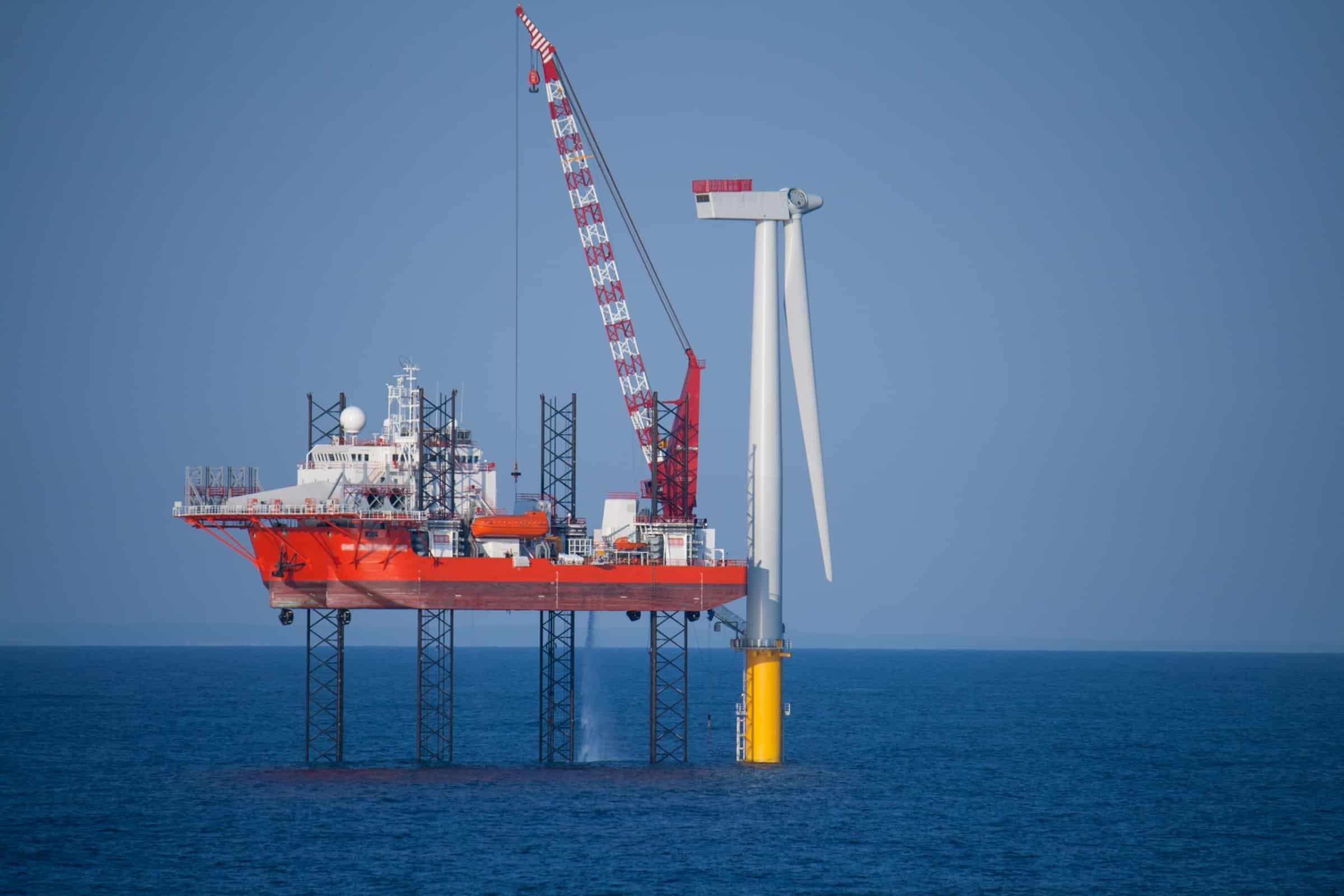
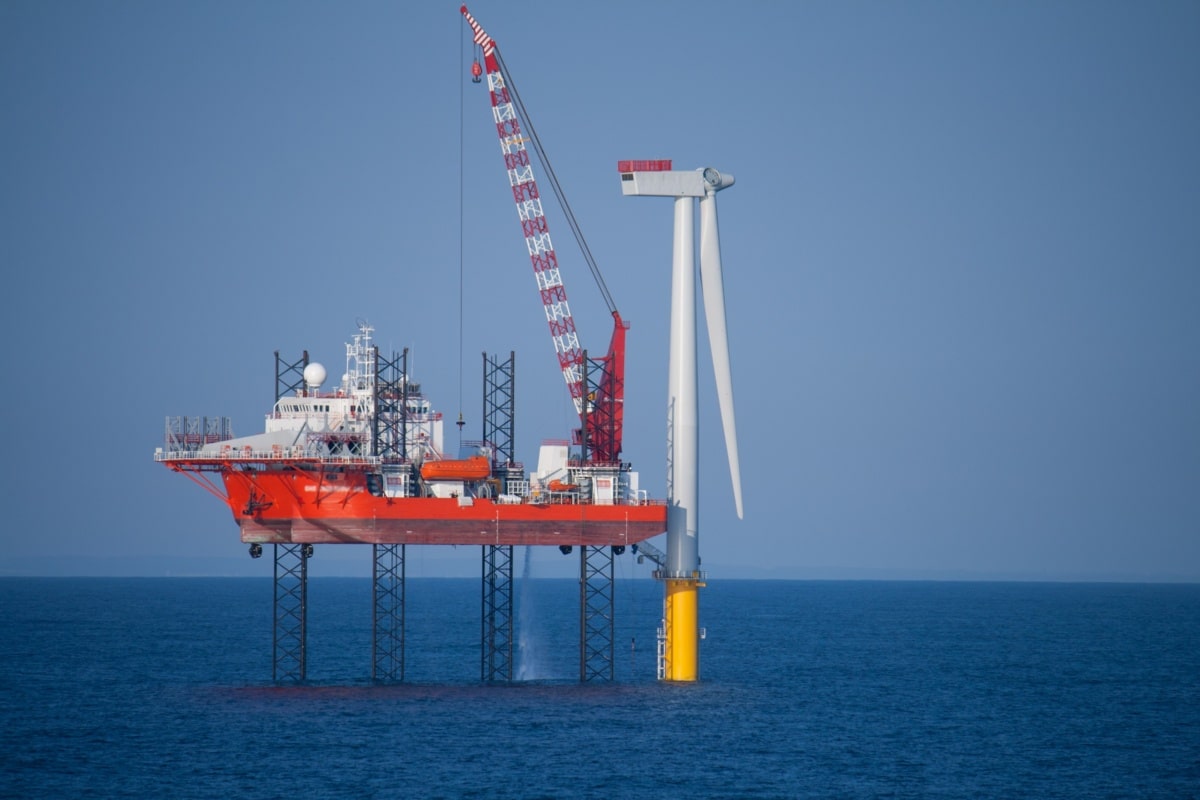
Jack‑up vessels operating in offshore wind are uniquely vulnerable during elevated, manned operations, when structural loads are transferred directly into the seabed. In seismically active regions, this exposes vessels to two critical and interrelated seismic risks:
- Seismic-induced soil liquefaction, which can result in sudden loss of bearing capacity and foundation instability; and
- Structural damage caused by seismic ground accelerations, affecting legs, hull and critical load paths.
These risks are particularly acute in SRC 4 offshore areas, including much of offshore Japan and Taiwan, where earthquake intensity and soil conditions combine to create challenging operating environments for jack‑up vessels and WTIVs.
Regulatory expectations are evolving
International standards have evolved in response to these risks. Under ISO 19901-2, jack-ups and wind turbine installation vessels operating offshore Japan and Taiwan are required to undergo an Abnormal Level Earthquake (ALE) seismic assessment as part of the permitting and location approval process.
Crucially, ALE seismic assessments go beyond simplified linear seismic checks. They require engineers to demonstrate that a structure can withstand extreme seismic events, explicitly accounting for:
- Non‑linear soil behaviour, including liquefaction and cyclic mobility
- Non‑linear structural response, including plastic deformation and relevant failure modes
- Soil–structure interaction under seismic loading
While limited material damage may be acceptable, the objective is to prove that the vessel remains stable and that risks to personnel, assets and project schedules are properly managed.
A holistic approach to ALE seismic assessment
To meet these evolving requirements, Longitude has developed a comprehensive ALE seismic assessment framework tailored specifically to jack-up vessels and offshore wind installation operations in high seismic regions.
The methodology explicitly incorporates ground effects that are often overlooked in traditional seismic analyses and is built around three core elements:
- Advanced liquefaction risk assessment, including Site Response Analysis (SRA) and excess pore pressure accumulation.
- Fully coupled soil–structure interaction modelling to capture non‑linear vessel response during ALE events.
- Cross-platform structural validation, improving confidence for insurers, marine warranty surveyors and project stakeholders.
Zahidur Rahman, Jack‑up Engineering Lead at Longitude, explains:
“With limited specialist capability available in the market, Longitude is well positioned to support developers and vessel owners by combining inhouse geoscience expertise, operational knowhow and a strong track record across Asia Pacific and other high seismic regions.”
Join the conversation at SMATECH 2026
Find out more and join the discussion at MA Marine SMATECH 2026 in London, where Zahidur Rahman will present:
“ALE Seismic Assessment of Wind Turbine Installation Vessels in Offshore Wind Farm Construction and Maintenance”
Zahidur will be presenting alongside Clara Costa Hildebrandt – Structural Engineer with Longitude France.
Together, they will share insights into advanced seismic risk assessment for jack‑ups and WTIVs, and how ALE analysis is being applied to real‑world offshore wind projects in Japan, Taiwan and beyond.
Explore Longitude’s Global Support for Jack-Up Operations
Longitude supports offshore wind developers, vessel owners and insurers with specialist jack‑up engineering and seismic risk assessment services, helping projects move forward safely in complex offshore environments.